
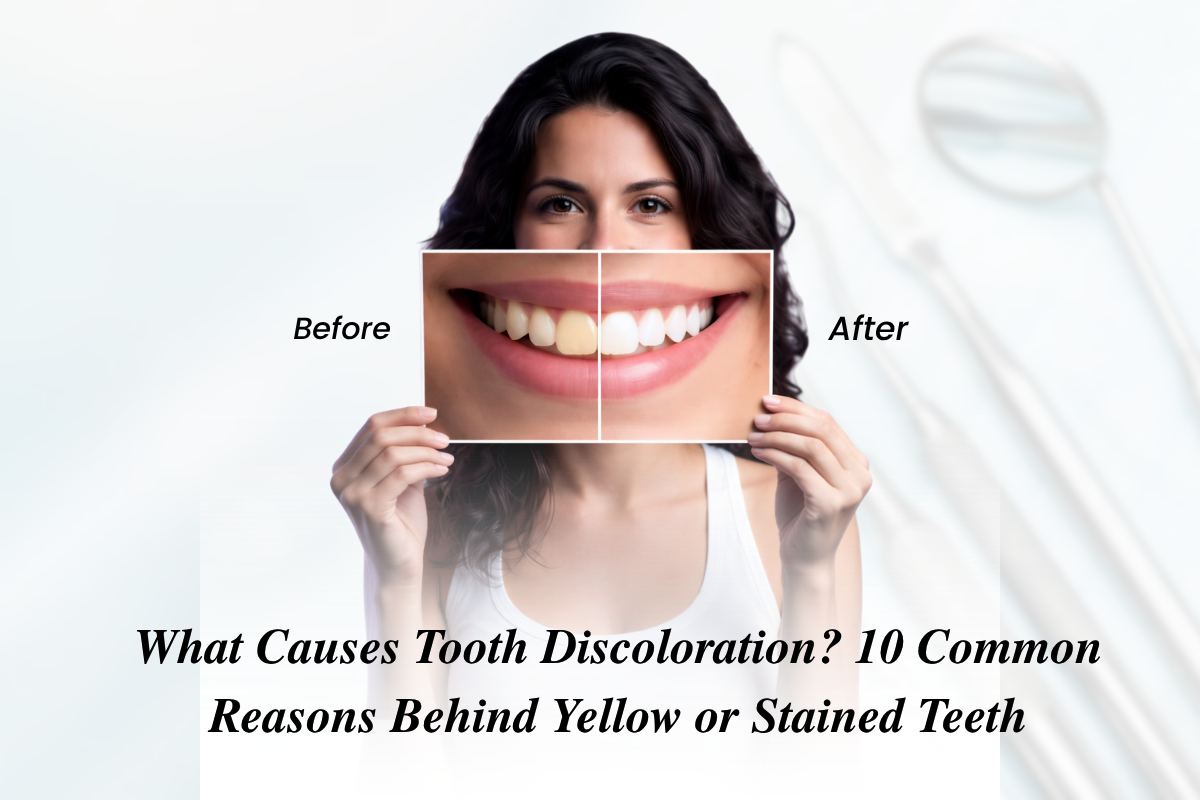
The most common causes of tooth discoloration include aging, poor oral hygiene, certain foods and drinks (like coffee and red wine), smoking, medications, and enamel wear. Stains can be external (on the surface) or internal (within the tooth), and each type requires a different approach to treatment.
What Are the Causes of Tooth Discoloration?
Tooth discoloration refers to any change in the natural color of your teeth—often appearing as yellow, brown, gray, or even white spots. Understanding the causes of tooth discoloration helps you prevent staining, maintain good oral health, and choose the right treatment—such as professional or at-home teeth whitening—when needed.
There are two main types:
- Extrinsic stains – affect the outer enamel
- Intrinsic stains – occur within the tooth structure
Why Do Teeth Become Yellow or Stained?
Teeth lose their brightness over time due to lifestyle habits, biological changes, and environmental factors. Enamel—the protective outer layer—can thin, revealing the naturally yellow dentin underneath.
For residents in coastal areas like San Pedro, CA, frequent exposure to staining foods, beverages, and even lifestyle habits can gradually impact tooth color if preventive care is inconsistent.
10 Common Reasons Behind Yellow or Stained Teeth
1. Poor Oral Hygiene
Inadequate brushing and flossing allow plaque and tartar buildup, leading to yellow or dull-looking teeth.
Quick Fix: Brush twice daily and floss regularly to prevent surface stains.
2. Staining Foods and Drinks
Certain foods and beverages are among the top stained teeth reasons, including:
- Coffee and tea
- Red wine
- Dark sodas
- Berries and tomato-based sauces
These contain pigments that stick to enamel.
3. Smoking and Tobacco Use
Nicotine and tar cause deep yellow or brown stains that are difficult to remove with regular brushing.
4. Aging and Enamel Wear
As you age, enamel naturally wears down, exposing the yellow dentin underneath.
5. Medications
Some medications contribute to yellow teeth causes, such as:
- Antibiotics (like tetracycline) during childhood
- Antihistamines
- Blood pressure medications
6. Excess Fluoride (Fluorosis)
Too much fluoride during early tooth development can lead to white spots or streaks.
7. Trauma or Injury
A tooth injury can affect the internal structure, leading to gray or dark discoloration.
8. Genetics
Some people naturally have thicker enamel or whiter teeth, while others are more prone to discoloration.
9. Dry Mouth (Reduced Saliva)
Saliva helps wash away food particles and bacteria. Reduced saliva increases the risk of staining.
10. Poor Dental Restorations
Old fillings, crowns, or dental materials may discolor over time, affecting overall tooth appearance.
When Should You Be Concerned About Tooth Discoloration?
You should consider a dental evaluation if:
- Discoloration appears suddenly
- Only one tooth is affected
- Stains don’t improve with brushing
- There are accompanying symptoms like pain or sensitivity
A professional exam helps determine whether the issue is surface-level or internal.
How Do Dentists Identify the Cause of Tooth Stains?
A dental evaluation typically includes:
- Visual examination
- Review of lifestyle habits
- Medical and medication history
- X-rays (if internal discoloration is suspected)
This step ensures the right treatment approach instead of guessing.
Treatment Options for Tooth Discoloration
Depending on the cause, treatment may include:
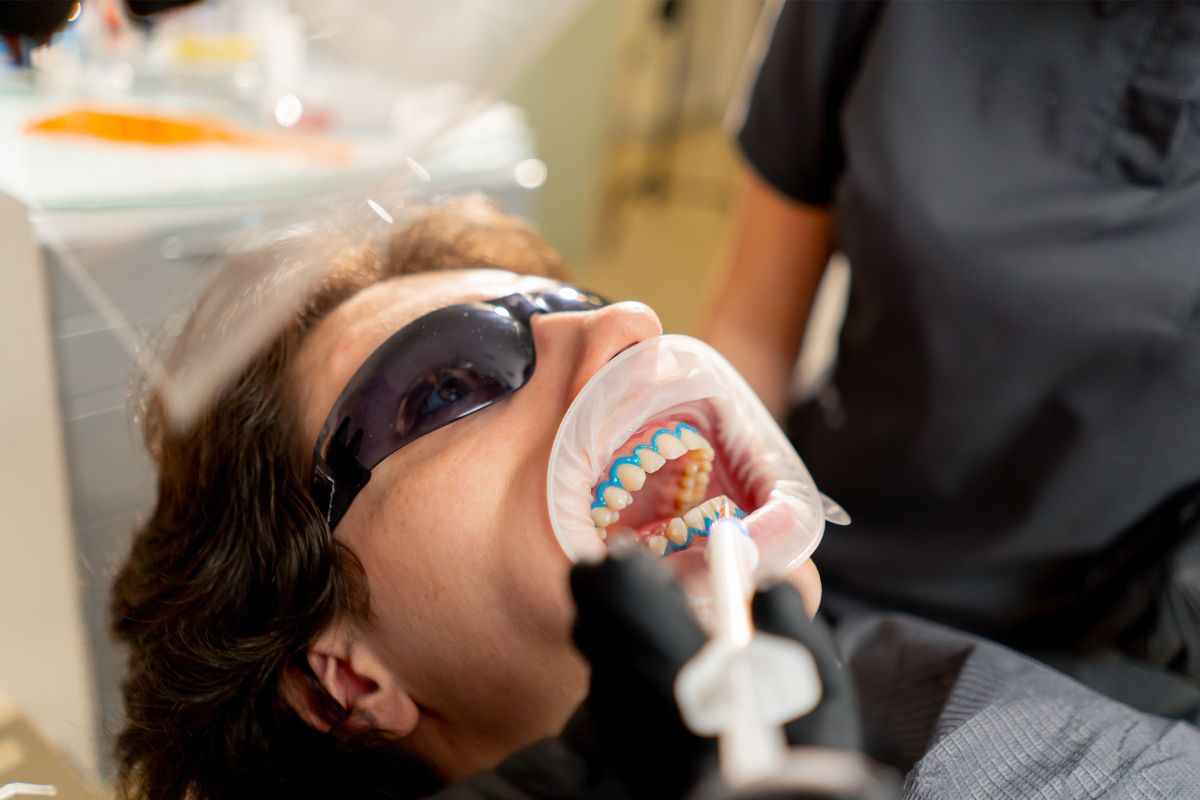
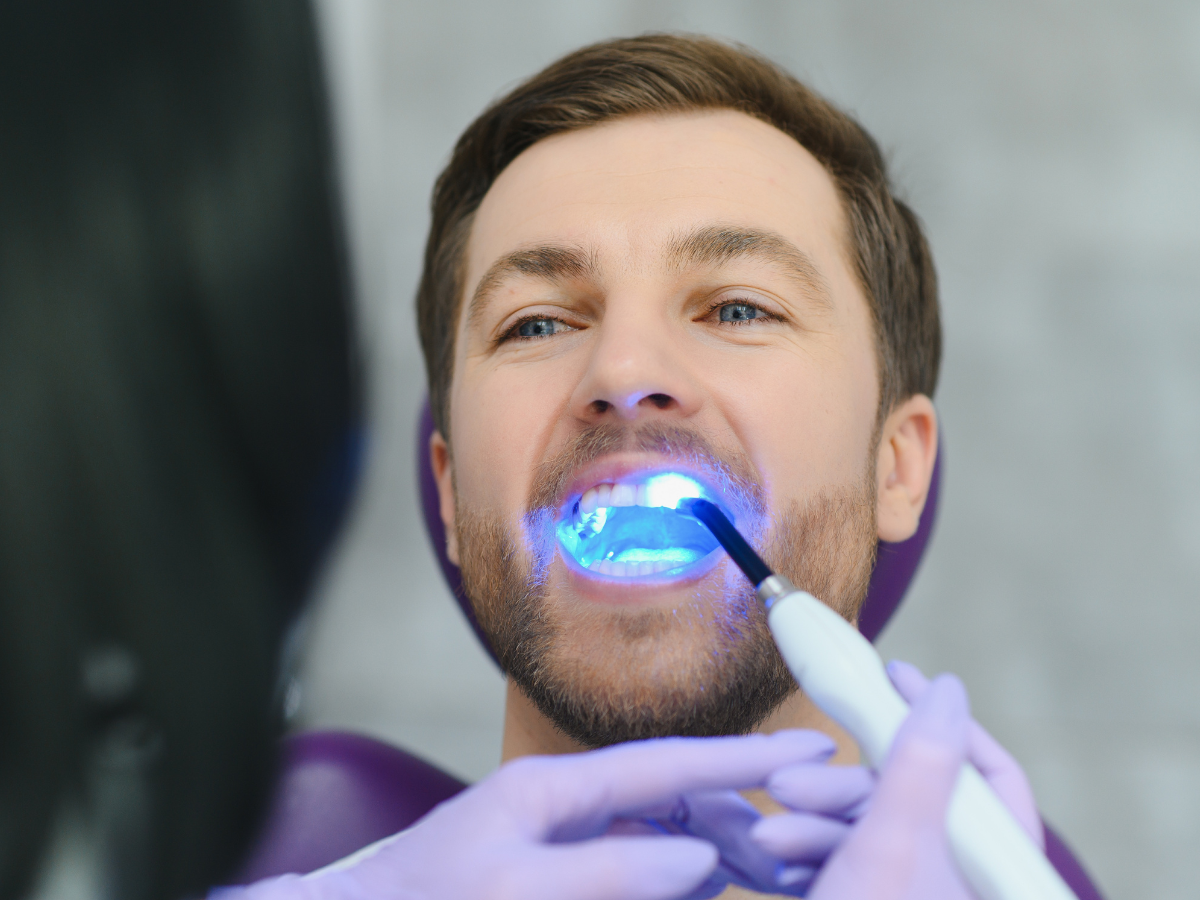
1. Professional Teeth Whitening
Removes extrinsic stains and brightens overall tooth shade. If you’re wondering whether professional whitening is worth it compared to over-the-counter options, you may find this helpful: Professional Teeth Whitening Benefits: Is It Really Better Than Store-Bought Kits in San Pedro? This guide breaks down the differences in safety, effectiveness, and long-term results so you can make an informed decision.
2. Dental Bonding
Covers discoloration with tooth-colored resin.
3. Veneers
Used for deep or resistant intrinsic stains.
4. Cleaning and Polishing
Removes plaque, tartar, and mild stains.
Residents in San Pedro, CA often benefit from routine cleanings combined with whitening consultations to maintain a brighter smile in the long term.
Benefits of Addressing Tooth Discoloration
- Improved smile confidence
- Better oral hygiene habits
- Early detection of underlying issues
- More uniform tooth appearance
If you’re noticing changes in your tooth color, don’t wait—call us today to schedule your consultation and restore your smile’s natural brightness.
Are There Any Risks If Left Untreated?
Tooth discoloration itself isn’t always harmful, but it can signal:
- Tooth decay
- Enamel erosion
- Internal damage
Ignoring the underlying cause may lead to more complex dental problems.
How to Prevent Yellow or Stained Teeth
Simple preventive steps:
- Brush twice daily with fluoride toothpaste
- Limit staining foods and drinks
- Use a straw for dark beverages
- Quit smoking
- Schedule regular dental cleanings
- Stay hydrated to maintain saliva flow
Aftercare Tips to Maintain Whiter Teeth
After whitening or cleaning:
- Avoid staining foods for 24–48 hours
- Maintain consistent oral hygiene
- Use dentist-recommended products
- Schedule periodic touch-ups if needed
If your teeth are looking dull or stained and at-home care isn’t helping, a professional evaluation can identify the exact cause and guide you toward the right solution.
At Andrew C. Sheng DMD, patients in San Pedro receive personalized guidance based on the type of discoloration—not just surface-level fixes. A consultation can help you understand whether whitening or another option is appropriate. Schedule your consultation today and take the first step toward a brighter, more confident smile.
Frequently Asked Questions (FAQs)
What is the most common cause of tooth discoloration?
The most common causes include poor oral hygiene, aging, and staining foods like coffee and tea.
Are yellow teeth always unhealthy?
Not necessarily. Yellowing can be natural due to dentin visibility, but it can also indicate plaque buildup.
Can tooth discoloration be reversed?
Yes, many cases—especially extrinsic stains—can be improved with professional whitening or cleaning.
Why is only one tooth discolored?
This may be due to trauma, internal damage, or a dead tooth and should be evaluated by a dentist.
Do whitening toothpastes work?
They help remove mild surface stains but are less effective for deep discoloration.
How long does teeth whitening last?
Results typically last from several months to a few years, depending on habits and maintenance.
Can medications cause permanent tooth stains?
Yes, especially if taken during tooth development (e.g., tetracycline).
Is tooth discoloration a sign of decay?
Sometimes. Dark spots or patches may indicate cavities or enamel damage.
Does drinking water help prevent stains?
Yes, water helps rinse away pigments and supports saliva production.
When should I see a dentist for stained teeth?
If discoloration is persistent, worsening, or affecting only one tooth, professional evaluation is recommended.
Conclusion
Tooth discoloration is common, but the cause isn’t always obvious. Identifying whether stains are surface-level or internal is key to choosing the right treatment.
If you’re unsure what’s causing changes in your tooth color, a dental checkup can provide clarity and help you explore safe, effective options tailored to your needs.